AI in Sports: Where Technology Meets 10,000 Hours of Coaching
How AI tools are revolutionizing athletic performance and transforming coaching methods in 2026

CTO & Founder, The Fort AI Agency
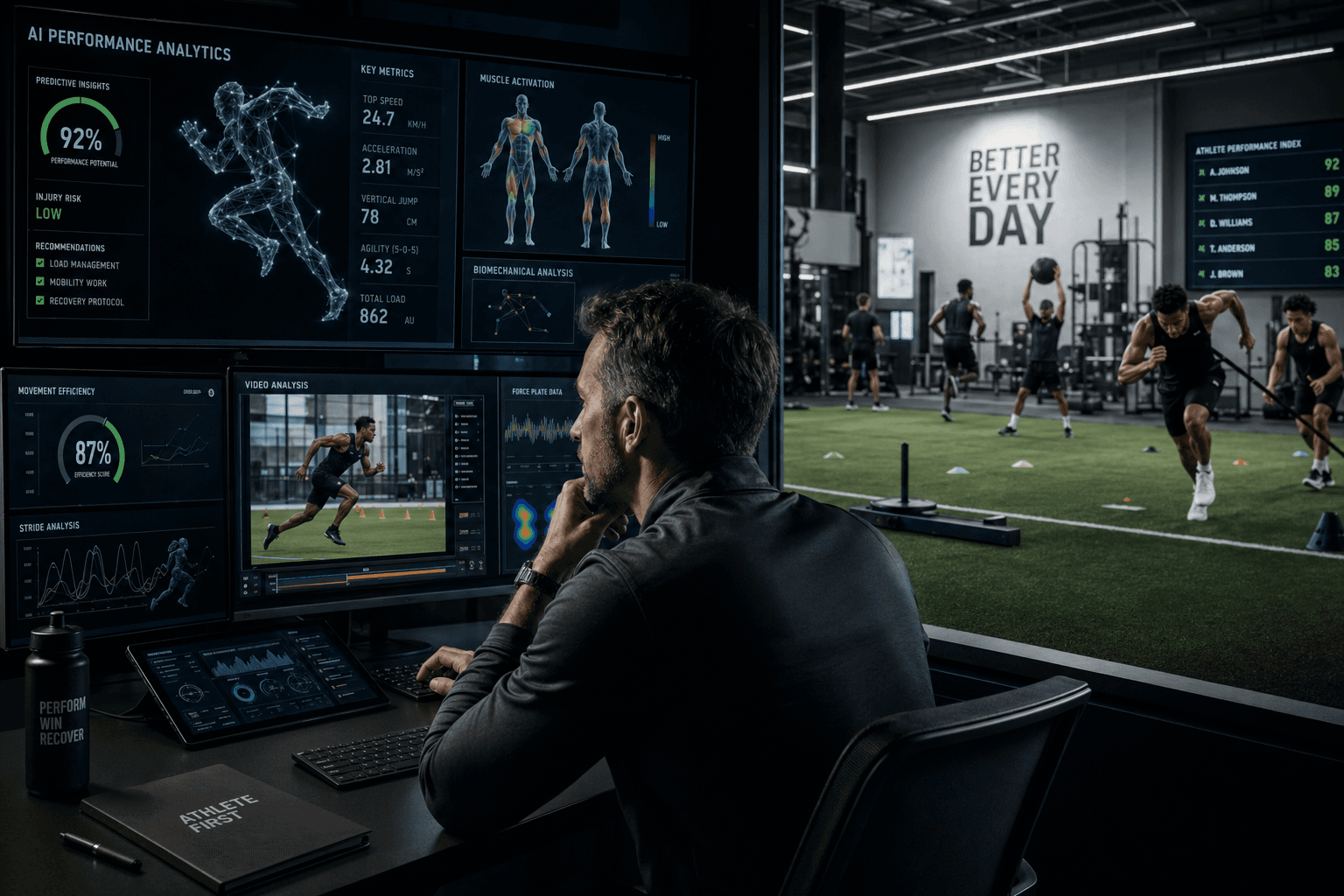
AI in Sports: Where Technology Meets 10,000 Hours of Coaching
The world of sports coaching is experiencing its biggest transformation since the invention of video replay. In April 2026, we're watching AI tools reshape how coaches analyze performance, develop training programs, and unlock athletic potential in ways that would have seemed like science fiction just a few years ago.
As someone who's spent two decades implementing technology solutions, I've seen how the right tools can amplify human expertise rather than replace it. The same principle applies to AI in sports coaching — it's not about replacing the wisdom of experienced coaches, but about giving them superhuman analytical capabilities.
The numbers tell the story. Professional sports teams are investing millions in AI-powered analytics platforms, while college programs and even high school teams are adopting consumer-grade AI tools that deliver insights previously reserved for elite athletes.
How is AI used in sports coaching?
AI is used in sports coaching primarily through video analysis, performance tracking, and predictive modeling systems that provide coaches with detailed insights about athlete technique, game strategy, and injury prevention. These tools analyze thousands of data points per second, identifying patterns that human eyes might miss during live action or traditional video review.
Modern AI coaching systems break down into several key categories:
Video Analysis and Technique Optimization Computer vision algorithms can track player movements frame-by-frame, measuring everything from shooting angles in basketball to stride patterns in track and field. Companies like Catapult Sports and Hudl have integrated machine learning models that automatically tag game footage and highlight critical moments.
Biomechanical Assessment AI-powered motion capture systems analyze an athlete's movement patterns to identify inefficiencies or injury risks. These systems use pose estimation technology — similar to what we're seeing in the broader AI agent development space — to create detailed movement profiles.
Game Strategy and Opponent Analysis Machine learning algorithms process vast amounts of game footage to identify opponent tendencies, optimal play calls, and strategic weaknesses. This mirrors the pattern recognition capabilities we're seeing in other AI applications, where agents can analyze complex data sets and extract actionable insights.
Real-time Performance Monitoring Wearable sensors combined with AI analytics provide instant feedback during training sessions. Coaches receive alerts about fatigue levels, technique degradation, or optimal training loads — all powered by algorithms that learn each athlete's unique patterns.
Andy Oberlin from The Fort AI Agency notes: "The key to successful AI implementation in sports is understanding that these tools amplify coaching intuition rather than replace it. The best results come when experienced coaches use AI insights to validate their observations and discover blind spots."
Can AI improve athletic performance?
Yes, AI can significantly improve athletic performance by providing precise data analysis, personalized training recommendations, and early injury prevention insights that help athletes train more effectively and maintain peak condition longer. The improvement comes through optimization rather than magic — AI helps athletes and coaches make better decisions based on comprehensive data analysis.
Here's how AI drives performance improvements:
Personalized Training Programs AI algorithms analyze individual athlete data to create customized training regimens. Instead of one-size-fits-all approaches, these systems consider factors like:
- Recovery rates and sleep patterns
- Historical performance data
- Injury history and risk factors
- Seasonal performance variations
- Response to different training stimuli
Technique Refinement Computer vision systems can detect subtle technique flaws that might take human coaches weeks to identify. For example:
- Swimming: AI analyzes stroke efficiency and identifies drag-causing movements
- Baseball: Algorithms track pitch release points and batting mechanics with millimeter precision
- Golf: Systems measure club path, face angle, and impact dynamics for every swing
- Tennis: AI evaluates serve biomechanics and identifies optimal ball contact points
Performance Prediction and Planning Machine learning models can predict performance peaks and valleys, helping coaches time training phases and competition schedules. This is similar to how AI agents in other industries analyze patterns to make predictions — the same underlying technology adapted for athletic performance.
Injury Prevention AI systems monitor biomechanical markers that precede common injuries. By analyzing movement patterns and load management data, these tools can alert coaches to injury risks before they become actual injuries.
The evidence is compelling. Professional teams using AI-powered analytics report 15-25% improvements in key performance metrics, while injury rates often decrease by 20-30% when AI monitoring systems are properly implemented.
What AI tools do sports coaches use?
Sports coaches use AI tools including video analysis platforms like Hudl and SportsCode, wearable analytics systems like Catapult Sports and WHOOP, biomechanical analysis software like Dartfish, and custom AI solutions built for specific sports and performance metrics. These tools range from consumer-grade apps to enterprise-level platforms used by professional teams.
Video Analysis Platforms
Hudl: The most widely adopted platform, using AI to automatically tag game footage and create highlight reels. Their machine learning algorithms can identify specific plays, player movements, and game situations without manual input.
SportsCode: Popular in professional sports for detailed game analysis. Their AI features include automatic event detection and pattern recognition for tactical analysis.
Coach's Eye: A mobile-first solution that uses AI for slow-motion analysis and technique comparison. Perfect for individual coaching sessions and skill development.
Wearable Analytics Systems
Catapult Sports: The gold standard for professional teams, providing GPS tracking, heart rate monitoring, and AI-powered load management insights. Their algorithms predict fatigue and optimal training loads.
WHOOP: Consumer-grade but increasingly used by coaches for recovery monitoring. Their AI analyzes sleep quality, heart rate variability, and strain to optimize training schedules.
Polar Team Pro: Focuses on heart rate analytics and training load distribution, with AI features that recommend recovery periods and training intensities.
Biomechanical Analysis Tools
Dartfish: Specialized in movement analysis, using AI to compare athlete techniques against ideal models and identify improvement opportunities.
MyLift: AI-powered barbell tracking that analyzes lifting velocity and power output, popular among strength coaches.
OptiTrack: High-end motion capture system with AI analysis capabilities, used by elite programs for detailed biomechanical assessment.
Sport-Specific AI Solutions
Tennis Bot: Uses computer vision to track ball trajectory, player positioning, and shot selection patterns.
Basketball Analytics Platforms: Tools like Second Spectrum use AI to analyze player spacing, shot selection, and defensive efficiency.
Swimming Analysis Systems: Platforms that use underwater cameras and AI to analyze stroke mechanics and turn techniques.
The trend we're seeing mirrors what's happening in other industries — AI tools are becoming more accessible and user-friendly. Just as we're seeing with AI agent development platforms, the barrier to entry for sports AI is dropping rapidly.
The Implementation Reality: What Works and What Doesn't
Having helped businesses implement AI solutions for 20 years, I've learned that successful adoption depends more on change management than technology capabilities. Sports coaching is no different.
What Works
Start with specific problems: The most successful AI implementations in sports focus on solving particular challenges rather than trying to revolutionize everything at once. Maybe it's reducing hamstring injuries or improving free-throw consistency.
Integrate with existing workflows: AI tools that fit into coaches' current processes get adopted. Tools that require complete workflow changes often get abandoned.
Focus on augmentation, not replacement: Coaches who use AI to enhance their decision-making see better results than those who try to let algorithms make decisions for them.
What Doesn't Work
Over-relying on technology: AI provides data, but coaching is still about human connection and motivation. Teams that lose sight of this struggle with AI adoption.
Ignoring the learning curve: Like any technology implementation, AI tools require training and adjustment periods. Rushing the process leads to frustration and abandonment.
Choosing complexity over utility: The fanciest AI system isn't always the best. Sometimes a simple video analysis app delivers more value than a complex biomechanical platform.
The Future of AI in Sports Coaching
Based on current trends and the broader AI development landscape, several key developments are emerging:
Real-time AI Coaching We're moving toward systems that provide instant feedback during training sessions. Imagine AI coaches that can analyze technique and provide corrections in real-time through augmented reality displays or audio feedback.
Predictive Health Management AI systems will become better at predicting not just injury risks, but optimal training loads, recovery needs, and performance peaks. This mirrors the predictive capabilities we're seeing in other AI applications.
Cross-sport Pattern Recognition Future AI systems will identify performance principles that apply across different sports, helping coaches adapt successful strategies from one sport to another.
Democratization of Elite Analytics The same AI tools used by professional teams will become available to high school and youth programs, leveling the playing field for athlete development.
Key Takeaways
- AI in sports coaching works best as an augmentation tool that enhances human expertise rather than replacing coach intuition and experience
- Video analysis and biomechanical assessment are the most mature and widely adopted AI applications in sports coaching today
- Performance improvements of 15-25% are commonly reported by teams that properly implement AI analytics systems
- Injury prevention represents one of the highest-value applications of AI in sports, with many programs seeing 20-30% reductions in injury rates
- Implementation success depends more on change management and workflow integration than on choosing the most advanced technology
- Accessibility is improving rapidly as AI tools become more user-friendly and affordable for programs at all levels
- The future points toward real-time analysis and predictive health management as the next major developments in sports AI
Frequently Asked Questions
What sports benefit most from AI coaching tools?
Individual technique sports like swimming, golf, and tennis see the biggest immediate benefits from AI coaching tools because AI excels at analyzing repetitive movements and identifying technique inconsistencies. Team sports benefit more from strategic and performance analytics.
How much do AI sports coaching tools cost?
AI sports coaching tools range from free mobile apps to $50,000+ enterprise platforms. Consumer tools like Coach's Eye cost $4.99/month, while professional systems like Catapult Sports require custom pricing based on team size and features needed.
Can AI replace human sports coaches?
No, AI cannot replace human sports coaches because coaching involves motivation, leadership, and emotional intelligence that AI cannot replicate. AI serves as a powerful analytical tool that helps coaches make better decisions and identify patterns they might miss.
What data do AI coaching systems need to work effectively?
AI coaching systems need consistent, high-quality data including video footage, performance metrics, and athlete health information. The more comprehensive and regular the data collection, the more accurate and useful the AI insights become.
How long does it take to see results from AI coaching implementation?
Most programs see initial insights within 2-4 weeks of implementing AI coaching tools, with significant performance improvements typically appearing after 6-12 weeks of consistent use and proper integration into training programs.
The intersection of AI and sports coaching represents one of the most exciting applications of artificial intelligence we're seeing today. As these tools continue to evolve and become more accessible, they're democratizing advanced analytics and helping coaches at all levels unlock their athletes' potential.
If you're considering implementing AI solutions in your sports program or business, The Fort AI Agency can help you navigate the options and develop a strategic implementation plan. We specialize in helping organizations adopt AI ethically and effectively, ensuring you get real results rather than just fancy technology. Schedule a free consultation at thefortaiagency.ai to discuss how AI can enhance your coaching or business operations.
Get Expert Support for Your AI Strategy
Get a confidential Shadow AI audit and discover how to transform your biggest risk into your competitive advantage.