ImageNet
Dataset Created
Listen to Article
Audio narration available
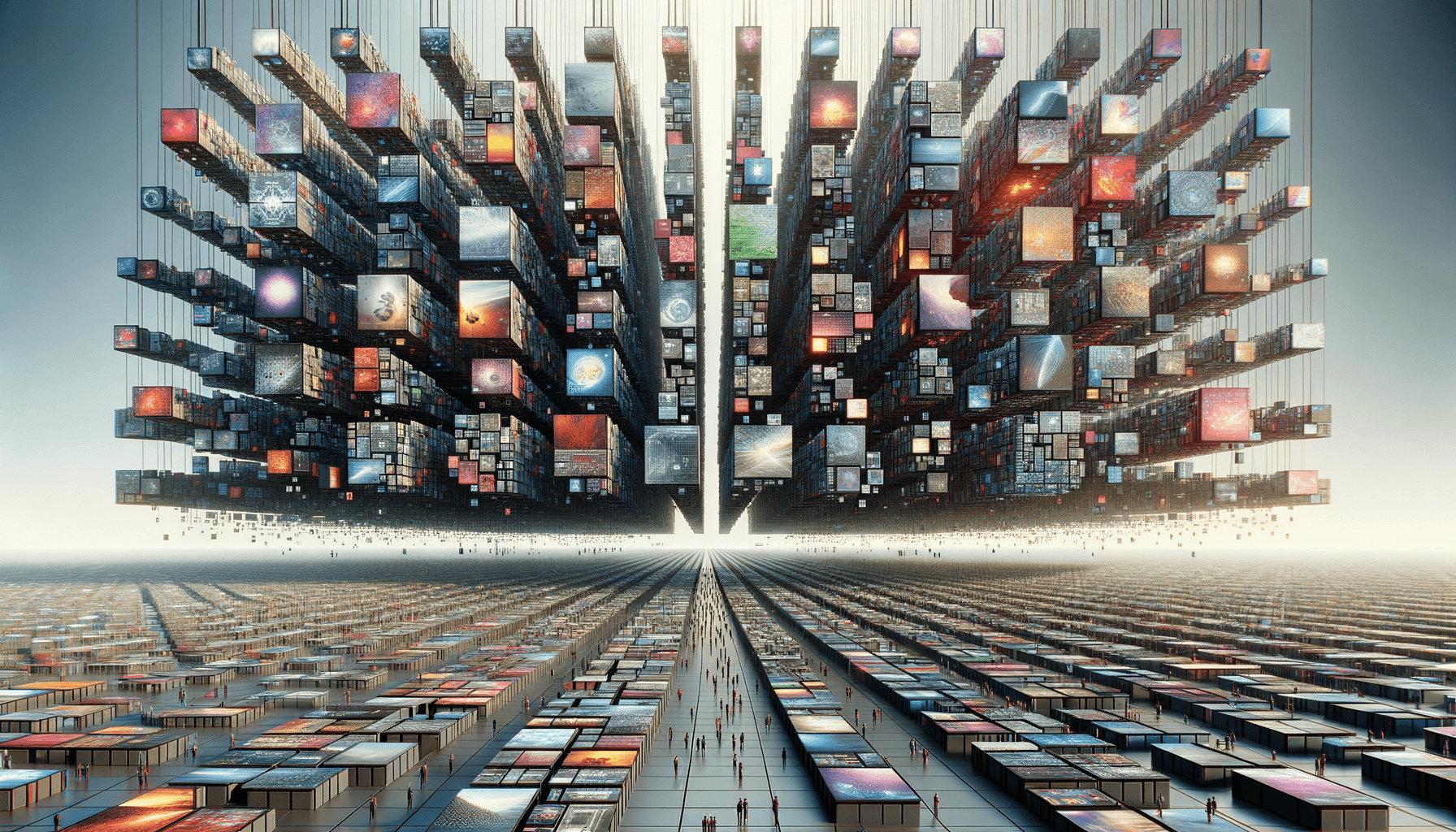
Fei-Fei Li's team created ImageNet, a massive dataset of 14M+ labeled images that became the benchmark for computer vision.
Introduction
ImageNet is a large-scale dataset of labeled images that has been instrumental in the development of deep learning. The dataset was created to provide a benchmark for computer vision algorithms, and it has been used to train and evaluate many of the most successful deep learning models. Created between 2007 and 2009, ImageNet became a transformative force in AI research.
Historical Context
ImageNet had a transformative impact on the field of computer vision. It provided a large-scale, high-quality dataset that was essential for training deep neural networks. The ILSVRC (ImageNet Large Scale Visual Recognition Challenge) competition, which was based on ImageNet, became a major driver of progress in the field and helped to usher in the deep learning revolution of the 2010s. Led by Fei-Fei Li at Stanford University, the project represented an unprecedented effort in dataset creation.
Technical Details
The images in ImageNet were collected from the internet and hand-annotated by human workers using Amazon Mechanical Turk. The dataset is organized according to the WordNet hierarchy, with each node of the hierarchy being depicted by hundreds and thousands of images. The ImageNet Large Scale Visual Recognition Challenge (ILSVRC) used a subset of ImageNet with 1,000 categories, roughly 1.2 million training images, 50,000 validation images, and 100,000 test images. The challenge included tasks such as image classification, object detection, and object localization.
Notable Quotes
"If we want to teach computers to see, we need to show them lots and lots of pictures."
Cultural Impact
ImageNet provided the large-scale data needed to train deep neural networks for computer vision tasks. Before ImageNet, most computer vision datasets were relatively small, which limited the complexity of models that could be trained. ImageNet's scale made it possible to train much deeper and more complex models. The ILSVRC competition became a major driver of progress in computer vision, with researchers competing each year to achieve the lowest error rate on the ImageNet dataset. This competition drove rapid improvements in deep learning techniques.
Contemporary Reactions
The creation of ImageNet was initially met with some skepticism about the value of such a large-scale labeling effort. However, the success of deep learning models trained on ImageNet quickly demonstrated its importance. The dataset became the standard benchmark for computer vision research, and its impact on the field cannot be overstated.
Timeline of Events
Legacy
ImageNet is one of the most important datasets in the history of AI. It has been used to train and benchmark thousands of computer vision models, and it has been a major catalyst for the development of deep learning. The dataset demonstrated the importance of large-scale data for training AI systems and helped to establish the paradigm of training models on large datasets and then fine-tuning them for specific tasks. The ILSVRC competition ran from 2010 to 2017, during which time error rates dropped dramatically thanks to advances in deep learning.
Impact on AI
Provided the training data fuel that powered the deep learning explosion in computer vision.
Fun Facts
Took 2.5 years to build using Amazon Mechanical Turk
Contains 14+ million images across 20,000+ categories
Annual competition drove rapid AI progress